

Black ice: the winter hazard you can’t always see
Black ice is a thin, often nearly invisible layer of ice on roads or sidewalks. It can look “black” because the dark pavement shows through. The National Weather Service describes it as patchy ice that cannot easily be seen and notes it often forms when meltwater refreezes overnight or when rain freezes as temperatures drop below freezing. (National Weather Service)
Even though “black ice” is not always listed as its own category in crash data, we do have solid statistics on crashes tied to icy, snowy, and slushy pavement, which is where black ice fits.
Why it matters (stats you can cite)
The Federal Highway Administration (FHWA) reports that over 1,300 people are killed and more than 116,800 are injured each year in crashes on snowy, slushy, or icy pavement. (FHWA Operations)
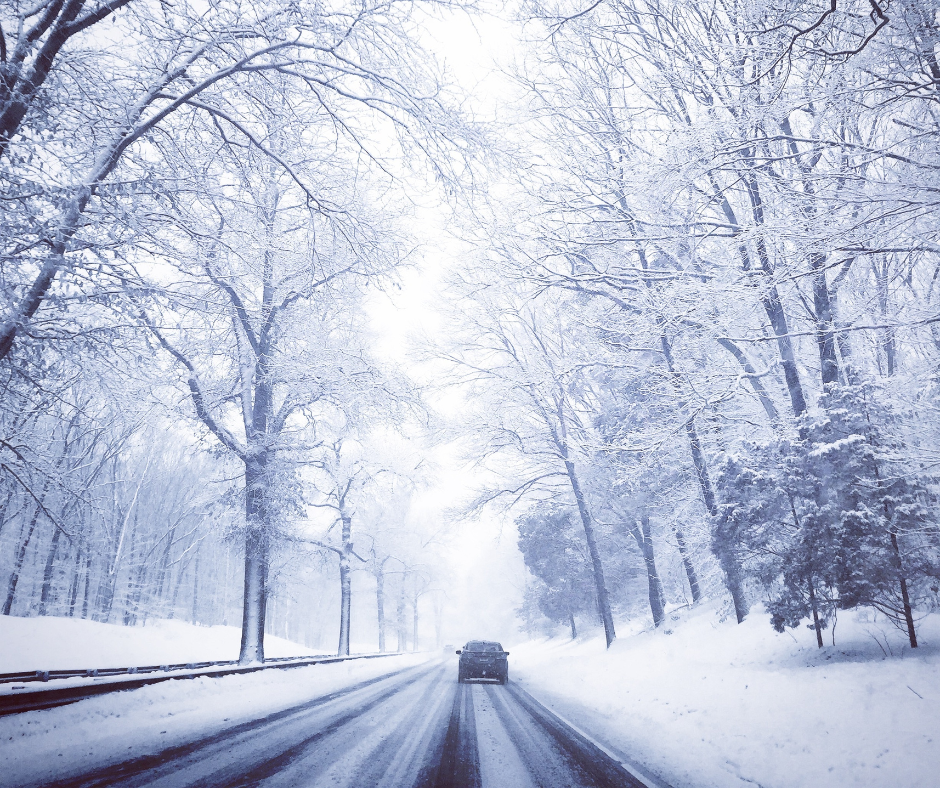
FHWA also reports 24% of weather-related crashes occur on snowy, slushy, or icy pavement. (FHWA Operations)
NHTSA reports that in 2023, there were 320 fatal crashes and an estimated 22,293 injury crashes when snow/sleet conditions were present, and it also cites an estimated 101,390 police-reported crashes in those conditions. (NHTSA)
Where black ice forms most often
Black ice tends to show up in predictable places and times:
Early morning (or after sunset) when temperatures dip and moisture refreezes (National Weather Service)
Bridges and overpasses, which can freeze faster than nearby roads (National Weather Service)
Shaded stretches of road where sunlight doesn’t warm the surface (National Weather Service)
How to spot it (when you can)
You often can’t “see” black ice clearly, but you can watch for clues:
Pavement that looks slightly darker, glossy, or unusually smooth
Areas that stay cold longer: bridges, ramps, shady curves
Conditions that create refreezing: daytime melt, then nighttime freeze (National Weather Service)
How to avoid black ice
The best defense is driving like it might be there, especially when temps hover around freezing.
On the road
Slow down and avoid sudden steering, braking, or acceleration. (NHTSA)
Leave extra following distance so you can slow gradually. (NHTSA)
Do not use cruise control on slippery surfaces. (AAA Exchange)
Use extra caution on bridges/overpasses and shaded areas, even if the road before them seems fine. (AAA Exchange)
Before you drive
Check that your tires are in good shape and properly inflated. (AAA Exchange)
Keep your gas tank at least half full in winter and carry basics (blanket, flashlight, scraper, water). (AAA Exchange)
Make sure your vehicle is winter-ready (NHTSA’s winter driving prep list is a good reference). (NHTSA)
If you hit black ice: what to do in the moment
When your tires lose traction, the goal is to avoid panic moves.
Ease off the accelerator and let the car slow down gradually. (National Weather Service)
Avoid slamming the brakes. (National Weather Service)
Steer gently and keep movements smooth until you regain traction. (National Weather Service)
Quick takeaway
If it’s near freezing, assume black ice could be on the road, especially on bridges, overpasses, and shaded areas. Slow down, skip cruise control, and give yourself extra space. Those small habits are the most reliable way to reduce risk on winter roads. (AAA Exchange)
Join Us in Keeping Winter Drives Safer
At Hunter’s Fund, we believe prevention starts with simple habits: drive focused, slow down when temperatures drop, and plan for icy roads. Share this article and help keep roads (and people!) safer this season.
Support our Safe Driving Weeks here